Author: Rakeez

  • Why Having More Users is Not The Way to Grow: Prioritizing Utility Over Engagement

    In the current digital economy, a fundamental error persists: the conflation of user attention with economic value. Many digital product companies operate under the premise that “engagement”—the sheer volume of time spent within an application—is the primary driver of success. However, time is a finite resource, while value is an objective assessment of a tool’s capacity to resolve a specific problem.

    To achieve long-term viability, a digital product must be rooted in the objective requirements of the user’s life or work.

    Definition of Core Concepts of The Marketplace

    To analyze this shift in focus, we must define the core concepts of the marketplace:

    Price: The objective amount of wealth a user is willing to exchange for the removal of that pain.

    Value: The objective utility provided by a product that enhances a user’s life or productivity.

    Engagement: The frequency and duration of a user’s interaction with a digital interface.

    Pain (Mental/Physical): A state of inefficiency, friction, or cognitive load that impedes the achievement of a specific goal.

    The Logical Chain of Product Viability

    1. The Primacy of Problem-Solving over Attention

    The existence of a digital product is justified only by its function as a tool. A tool’s efficacy is measured by how quickly and effectively it completes a task, not by how long the user holds it. Therefore, a product that seeks to maximize “time spent” often contradicts the goal of efficiency.

    When a company prioritizes why a user will pay, they are identifying the specific gap in reality that their product fills. Whether it is the automation of a complex calculation or the secure storage of sensitive data, the user pays for the result, not the process of using the app.

    2. The Identification of Objective Pain Points

    A user does not exchange currency for “features”; they exchange it for the relief of a specific tension. This tension exists in two forms:

    • Physical Pain/Friction: The expenditure of unnecessary labor, time, or physical resources (e.g., manually entering data that could be synced).
    • Mental Pain/Cognitive Load: The stress of uncertainty, the burden of memorization, or the chaos of disorganized information.

    By identifying these objective pains, a company moves from the realm of “optional entertainment” to “essential utility.” A user pays for a product because the cost of the product is lower than the cost of the pain it resolves.

    3. The Causal Mechanism of Payment

    The decision to pay is a rational act of trade. For a trade to occur, the user must perceive that the value received is greater than the value surrendered (the price).
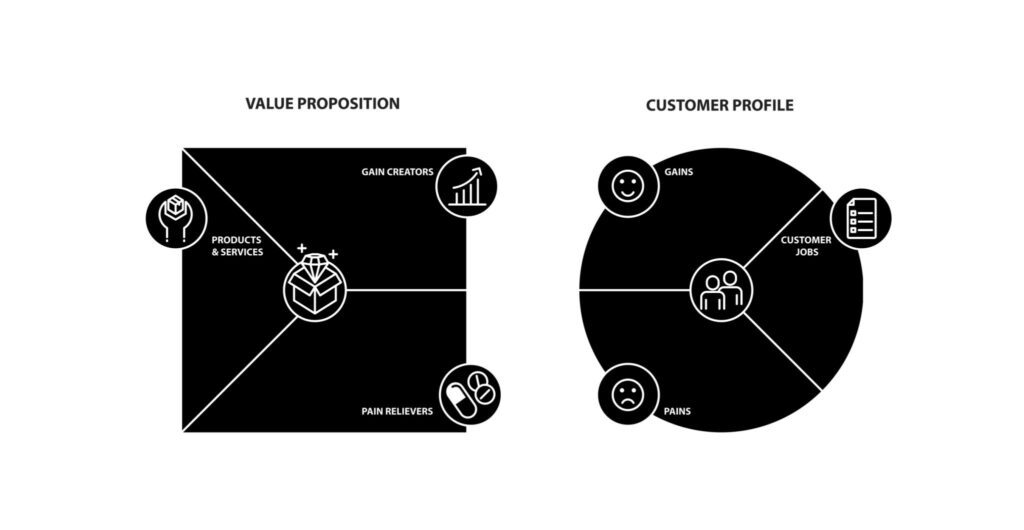
    If a company focuses on “how to make them use the app more,” they are often implementing addictive loops or “dark patterns” that do not add value but instead consume the user’s time. Conversely, focusing on what they will pay for forces the company to align its development with the user’s actual needs. This alignment creates a “Value-Price-Cost” relationship where the product is a net positive for the user’s life, ensuring a sustainable revenue model that does not rely on the volatility of attention.

    Integration: The Rationality of Purpose

    The shift from engagement-centric design to value-centric design is a shift from the subjective to the objective. A company that understands the causal link between a user’s pain and the product’s solution does not need to “trap” users inside an interface.

    When a product is designed as a precise response to a reality-based problem, the user’s willingness to pay becomes a logical consequence. Excellence in digital product development is not found in the capture of the mind’s attention, but in the liberation of the user’s capacity to act effectively in the world.

  • The “Specs Trap”: Why Your Best Effort Isn’t Always the Best Product

    In the tech and manufacturing worlds, there is a common siren song: More is Better. Engineering teams often fall into the trap of believing that pushing a component to its absolute physical limit—whether it’s speed, capacity, or raw power—automatically results in a superior product. If the competition has 12, we’ll give them 24. If they have 100, we’ll give them 1,000.

    But here is the hard truth of the market: A product defined by a “maximum effort” is rarely the product defined as “the best.”

    The Difference Between “More” and “Better”

    A better product isn’t born in a vacuum of technical capability. It’s born at the intersection of utility and human behavior. When a company focuses solely on what it can do (the “can-do” ceiling), it often loses sight of what the user needs to do (the “utility” floor).

    Consider these three reasons why “maxing out” doesn’t equal “winning”:

    1. Diminishing Returns: There is always a point where adding more of a specific feature provides zero additional value to the user. If a car can go 300 mph but the speed limit is 70, that extra 230 mph isn’t a “better” feature—it’s an expensive, unused ornament.
    2. The Hidden Cost of Excess: Every “extreme” spec comes with a trade-off. Over-engineering one aspect usually drains resources from others—like battery life, portability, price, or ease of use. A product that is 10/10 in one area but 2/10 in everything else is a broken experience.
    3. The Complexity Burden: Often, the “most powerful” version of a product becomes so complex that it creates friction. If a user has to read a 50-page manual just to access the “best” features, they’ll likely stick to a simpler competitor.

    What Actually Defines a “Better” Product?

    If the “best” isn’t defined by the highest numbers, how is it defined? It comes down to The Perfect Fit.

    “A better product isn’t the one that does the most; it’s the one that solves the problem with the least amount of friction.”

    1. Intuitive Alignment

    A great product feels like an extension of the user. It anticipates the workflow. It doesn’t ask the user to adapt to the machine; it adapts to the human.

    2. Reliability over Raw Power

    Users value consistency. A product that works perfectly 100% of the time within a standard range of specs is infinitely more valuable than a product that works spectacularly 50% of the time but crashes when pushed.

    3. Value-to-Need Ratio

    The market rewards products that hit the “Sweet Spot.” This is the point where the features provided perfectly mirror the challenges the user faces daily. Anything less is a deficiency; anything more is a waste of the user’s money.

    The Goal: Solved Problems, Not Satiated Ego

    Companies often build “beast” products to prove to their competitors that they can. It’s an exercise in ego and engineering prowess.

    However, the products that define eras—the ones we can’t live without—are rarely the ones with the highest spec sheets. They are the ones that understood our frustrations, whispered a solution, and sat quietly in our pockets or on our desks, doing exactly what they were meant to do.

    The Lesson: Stop trying to build the product that can do the most. Start building the product that fits the best.

  • What Makes a Better Digital Product in Comparison : Why the Most “Powerful” Software Often Fails

    In digital product development, there is a dangerous temptation known as Feature Creep. It’s the belief that if you just add one more filter, one more integration, or one more dashboard, the product will finally be “perfect.”

    Software teams often focus on what they can build—coding complex algorithms or sprawling architectures—assuming that a high “feature count” equals a better product. But in the digital world, more code often leads to more problems.

    A better digital product isn’t the one with the most buttons; it’s the one that disappears into the user’s workflow.

    The “Maximum Capability” vs. “User Need” Gap

    When a company builds a digital tool based on its maximum engineering capability rather than user needs, they create “Bloatware.” Here is why raw digital power doesn’t translate to a better product:

    • Cognitive Overload: Every time you add a feature that only 1% of people use, you make the interface 10% harder for the other 99% to navigate. A “better” product protects the user’s attention.
    • The Paradox of Choice: If a project management tool has 50 different ways to view a task, the user spends more time configuring the tool than actually doing the work.
    • Performance Decay: A digital product that can do everything is often slow, heavy, and prone to bugs. Speed and stability are “features” that users value far more than niche functionalities.

    The Anatomy of a Superior Digital Product

    If technical complexity isn’t the benchmark, what is? A truly “better” digital product focuses on The Jobs to Be Done.

    1. Low Friction, High Reward

    The best digital products have a “Time to Value” (TTV) that is near zero. You open the app, and within seconds, the problem you came to solve is handled. Whether it’s hailing a ride or sending a payment, the “best” product is the one that requires the fewest clicks.

    2. Intentional Constraints

    Great product design is about saying no. A better product has the courage to exclude features that don’t serve its core purpose. By narrowing the focus, the developers can make the core experience flawless rather than making the total experience mediocre.

    3. Contextual Intelligence

    A superior digital product knows where the user is in their journey. It doesn’t show you every tool at once; it shows you the right tool at the right time. This “just-in-time” design is a hallmark of high-level product thinking.

    Efficiency Over Excess

    We don’t need a text editor that can also edit 4K video and manage a database. We need a text editor that makes writing feel effortless.

    When digital companies stop asking, “What else can we add?” and start asking, “What can we take away to make this clearer?”, they stop building “powerful” software and start building great products.

    The Goal: Don’t build a digital Swiss Army knife if your user just needs a sharp scalpel.

  • What is an MVP and MLP and What it Takes to Scaling a Digital Product After Testing the Idea

    In the fast-moving world of digital products, the “build it and they will come” philosophy is a recipe for expensive failure. Instead, successful founders use a tiered approach to validation—moving from “viable” to “lovable” before they ever think about “scaling.”

    If you’re wondering whether you should be building an MVP, an MLP, or if you’re ready to hit the gas on growth, here is the breakdown of what these terms mean and the roadmap for what comes next.

    1. The Definitions: MVP vs. MLP

    While they sound similar, these two concepts serve very different stages of the product-market fit journey.

    MVP: Minimum Viable Product

    • The Goal: Validation.
    • Focus: Functionality.
    • The Question: “Does this solve the problem?” An MVP is the leanest version of your product that still delivers value. It isn’t meant to be pretty; it’s meant to test your core hypothesis. If users are willing to use a “clunky” version of your tool because it solves a burning pain point, you’ve found viability.

    MLP: Minimum Lovable Product

    • The Goal: Retention and Delight.
    • Focus: Design and Experience.
    • The Question: “Do users want to keep coming back?” In a crowded market, “viable” is often not enough. An MLP adds a layer of delightful UI/UX and emotional connection. It’s the version that makes users talk about your product to their friends. You move to an MLP once you know the core idea works, but you need to win the “attention economy.”

    2. Scaling: What Happens After the Test?

    Scaling isn’t just “getting more users.” It’s about ensuring your product, tech, and team don’t break under the weight of those users. Once your MVP or MLP has proven there is real demand, you enter the Scaling Phase.

    A. Refine the Tech Stack (Paying Off Technical Debt)

    During the MVP stage, you likely took shortcuts to move fast. To scale, you must:

    • Optimize Infrastructure: Move from a single server to cloud-based auto-scaling (AWS, Azure, or Google Cloud).
    • Database Health: Implement caching (like Redis) and indexing to ensure searches don’t lag as your data grows.
    • Microservices: If your app is a “monolith,” consider breaking it into smaller, manageable services so one bug doesn’t crash the whole system.

    B. Data-Driven Prioritization

    Now that you have real users, stop guessing. Use the MoSCoW Method to handle your backlog:

    • Must-haves: Critical for the “Full Product” version.
    • Should-haves: High value but not “deal-breakers.”
    • Could-haves: Small “delighters” (the MLP territory).
    • Won’t-haves: Ideas that didn’t resonate during testing.

    C. Operations and Team Evolution

    Scaling a product requires scaling the people behind it.

    • Specialization: Your “jack-of-all-trades” developer may now need a dedicated DevOps engineer and a QA (Quality Assurance) specialist.
    • Customer Support: As users grow, so do tickets. Implementing automated help desks or AI chatbots becomes a necessity, not a luxury.
    • Security & Compliance: Growth attracts attention. Ensure you are meeting GDPR, SOC2, or other industry-specific regulations before you expand globally.

    3. When are you ready to scale?

    Before you pour money into marketing, check these three “Green Lights”:

    1. Retention: Are at least 30–40% of users coming back after 30 days?
    2. Unit Economics: Is your Customer Lifetime Value ($CLTV$) at least 3x your Customer Acquisition Cost ($CAC$)?
    3. High NPS: Do your users actually like the product enough to recommend it?

    The Bottom Line

    The journey from an MVP (testing the “what”) to an MLP (perfecting the “how”) is the foundation. Scaling is the “where”—taking that proven value to the entire market. Don’t rush into scaling until your users truly love what you’ve built.