In the current digital economy, a fundamental error persists: the conflation of user attention with economic value. Many digital product companies operate under the premise that “engagement”—the sheer volume of time spent within an application—is the primary driver of success. However, time is a finite resource, while value is an objective assessment of a tool’s capacity to resolve a specific problem.
To achieve long-term viability, a digital product must be rooted in the objective requirements of the user’s life or work.
Definition of Core Concepts of The Marketplace
To analyze this shift in focus, we must define the core concepts of the marketplace:
Price: The objective amount of wealth a user is willing to exchange for the removal of that pain.
Value: The objective utility provided by a product that enhances a user’s life or productivity.
Engagement: The frequency and duration of a user’s interaction with a digital interface.
Pain (Mental/Physical): A state of inefficiency, friction, or cognitive load that impedes the achievement of a specific goal.
The Logical Chain of Product Viability
1. The Primacy of Problem-Solving over Attention
The existence of a digital product is justified only by its function as a tool. A tool’s efficacy is measured by how quickly and effectively it completes a task, not by how long the user holds it. Therefore, a product that seeks to maximize “time spent” often contradicts the goal of efficiency.
When a company prioritizes why a user will pay, they are identifying the specific gap in reality that their product fills. Whether it is the automation of a complex calculation or the secure storage of sensitive data, the user pays for the result, not the process of using the app.
2. The Identification of Objective Pain Points
A user does not exchange currency for “features”; they exchange it for the relief of a specific tension. This tension exists in two forms:
- Physical Pain/Friction: The expenditure of unnecessary labor, time, or physical resources (e.g., manually entering data that could be synced).
- Mental Pain/Cognitive Load: The stress of uncertainty, the burden of memorization, or the chaos of disorganized information.
By identifying these objective pains, a company moves from the realm of “optional entertainment” to “essential utility.” A user pays for a product because the cost of the product is lower than the cost of the pain it resolves.
3. The Causal Mechanism of Payment
The decision to pay is a rational act of trade. For a trade to occur, the user must perceive that the value received is greater than the value surrendered (the price).
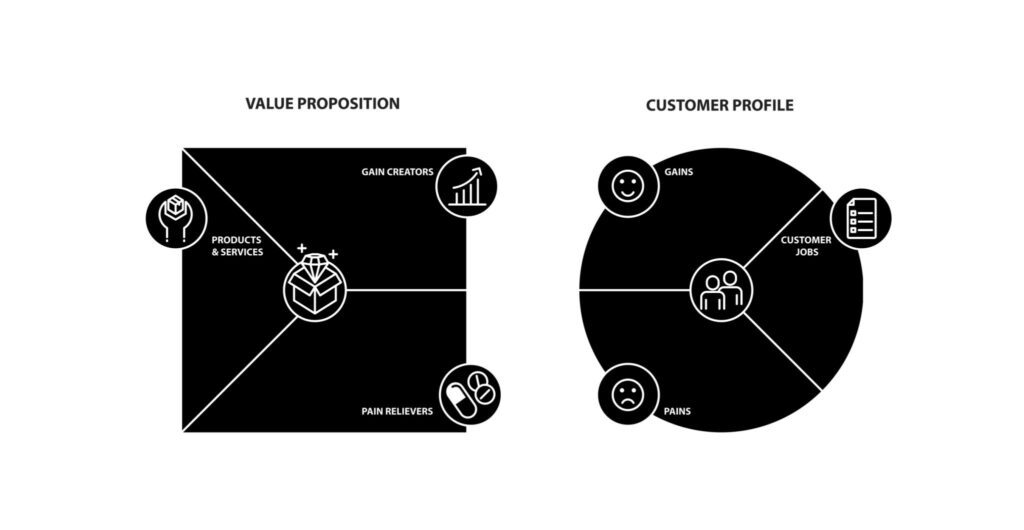
If a company focuses on “how to make them use the app more,” they are often implementing addictive loops or “dark patterns” that do not add value but instead consume the user’s time. Conversely, focusing on what they will pay for forces the company to align its development with the user’s actual needs. This alignment creates a “Value-Price-Cost” relationship where the product is a net positive for the user’s life, ensuring a sustainable revenue model that does not rely on the volatility of attention.
Integration: The Rationality of Purpose
The shift from engagement-centric design to value-centric design is a shift from the subjective to the objective. A company that understands the causal link between a user’s pain and the product’s solution does not need to “trap” users inside an interface.
When a product is designed as a precise response to a reality-based problem, the user’s willingness to pay becomes a logical consequence. Excellence in digital product development is not found in the capture of the mind’s attention, but in the liberation of the user’s capacity to act effectively in the world.
Leave a Reply